
Health advice you can check
Plain-English guides to weight, medicines and everyday health. Written by our editorial team, medically reviewed by our clinical lead, and referenced so you can follow the evidence yourself.

Start here
Three pieces that answer most of what people ask us first.
- 01What is a healthy BMI in the UK?The ranges, who they work for, and the 30-second check that tells you more.
- 02Calorie deficit explainedWhy the arithmetic everyone quotes is wrong, and what to do instead.
- 03Why am I not losing weight?Nine reasons the scales stall, in the order they are actually likely.
Weight loss
All weight loss articles
Metabolic adaptation: three different things people call one thing
Everyone quotes the Biggest Loser study. Almost nobody quotes the part where metabolic slowing did not predict who regained, and the people who kept most weight off had slowed down the most.
Read
Weight cycling: a risk marker that keeps being read as a cause
The headline is that weight cycling is dangerous. The problem is that losing weight without meaning to is a sign of serious illness, and no observational study has managed to separate the two.
Read
Set point theory: a biased range, not a thermostat
There is a version of this idea that is true and useful, and a version that tells people their weight is fixed for life. The second one is not supported by the evidence, and it puts people off trying.
Read
Appetite hormones: what they do, and what the famous study really showed
One small Australian study is cited constantly as proof that your hormones never forgive you for losing weight. It had fifty people and no control group. What it did show is still interesting.
Read
Insulin resistance: what it is, and why the NHS will not measure it
Private testing companies will sell you an insulin resistance score tomorrow. The people who invented the score published a paper explaining why you should be careful with it.
Read
Metabolic syndrome: a label the UK does not actually use
It has a name, a set of numbers and a Wikipedia page. What it does not have is a NICE guideline, an agreed cause, or a treatment that differs from treating each part separately.
ReadLatest
Newest first
Hair care and styling damage: telling breakage apart from hair loss
Hair found on the floor with a small white bulb on the end came out of the follicle. Hair without one snapped. Almost everything useful follows from that distinction.
Read
Hair loss and anabolic steroids: what they accelerate and what may not come back
Steroids do not give you a hair loss gene you did not have. They compress a process that might have taken fifteen years into two or three.
Read
PRP for hair loss: promising, unstandardised, and not a replacement for anything
The evidence is more positive than sceptics allow and much less useful than clinics imply, for one reason: no two clinics are doing the same thing.
Read
Beard and eyebrow hair loss: the red flags that matter most
Scalp hair loss gets all the attention. Eyebrow loss is the one that more often means something, and occasionally means something urgent.
Read
Hair loss and PCOS: what the pattern tells you, and what it doesn’t
Hair thinning gets people sent for PCOS testing constantly. The guideline is surprisingly clear that on its own, it is one of the weaker reasons to look.
Read
Hair loss and thyroid disease: why the shedding often starts after treatment does
The most common thyroid hair question is why the shedding got worse once treatment started. The answer is a lag, not a failure, and it is not a reason to stop.
Read
Dandruff and seborrhoeic dermatitis: what it is, what it isn’t, and whether it causes hair loss
A flaky scalp is not an infection, not a hygiene failure, and not a cause of pattern baldness. It can still make your hair shed, and it is worth treating properly.
Read
Traction alopecia: the hair loss caused by how hair is worn
Almost the only hair loss with a single, identifiable, removable cause. Which is good news, right up until the point where it stops being reversible.
Read
Sleep and sexual function: the link most men miss
Testosterone is made largely while you are asleep, and erections happen there too. Treating the night is one of the more overlooked routes to fixing the day.
Read
When to see someone about a sexual problem: red flags and UK routes
Most of this library is for reading. This page is for the moments when you should stop reading and go and be seen.
Read
Desire mismatch: when one of you wants sex more often
Almost every long relationship has a higher-desire and a lower-desire partner. The trouble usually starts with the story each one tells about what that means.
Read
Sex after a stroke: safety, timing and what actually changes
The question almost nobody asks on a stroke ward, and the one most people go home worrying about. The short answer is reassuring; the longer one is practical.
Read
Statins and sexual function: separating the evidence from the reputation
One of the few areas in men’s health where the popular belief and the randomised evidence point in opposite directions. Worth knowing before you stop anything.
Read
Penis size concerns: the measured data and what to do with it
Most men worried about size are within a centimetre of average and have never seen a properly measured figure. Here is the actual data, and the harms nobody selling a solution mentions.
Read
Pornography and sexual function: what the evidence actually shows
A claim repeated confidently online is not the same as a finding. Here is what the studies support, what they do not, and why that distinction matters if you are worried.
Read
Recreational drugs and sex: what each one actually does
Most men who use drugs and have sex do not tell a clinician either thing. That silence is where the avoidable harm lives, so here is the plain version.
Read
Sex and ageing in men: what changes normally and what doesn’t
Some of what changes with age is just change. Some of it is disease wearing age as a disguise. Telling them apart is the whole skill.
Read
Prostate symptoms and sex: what the treatments actually do
Two classes of prostate medicine, two completely different sexual effects, and a striking number of men who were never told about either.
Read
Male fertility and sperm health: what the numbers mean and what changes them
A semen analysis is not a pass or a fail, the reference values changed and most of the internet hasn’t noticed, and nothing you do today shows up for three months.
Read
When ED treatment isn’t working: what to check before giving up
Before you conclude that nothing works, it is worth knowing how often ‘nothing works’ turns out to mean ‘four tablets, taken wrong, after dinner’.
Read
Penile implants: what they involve, and why the decision is permanent
The treatment with the highest satisfaction figures in erectile dysfunction, and the only one you cannot undo. Both of those need saying in the same breath.
Read
Vacuum pumps for erectile dysfunction: how they work and who they suit
Unfashionable, mechanical, and quietly one of the few ED treatments that works without needing your blood vessels to cooperate chemically.
ReadMetabolic adaptation: three different things people call one thing
Everyone quotes the Biggest Loser study. Almost nobody quotes the part where metabolic slowing did not predict who regained, and the people who kept most weight off had slowed down the most.
ReadWeight cycling: a risk marker that keeps being read as a cause
The headline is that weight cycling is dangerous. The problem is that losing weight without meaning to is a sign of serious illness, and no observational study has managed to separate the two.
ReadSet point theory: a biased range, not a thermostat
There is a version of this idea that is true and useful, and a version that tells people their weight is fixed for life. The second one is not supported by the evidence, and it puts people off trying.
ReadAppetite hormones: what they do, and what the famous study really showed
One small Australian study is cited constantly as proof that your hormones never forgive you for losing weight. It had fifty people and no control group. What it did show is still interesting.
ReadInsulin resistance: what it is, and why the NHS will not measure it
Private testing companies will sell you an insulin resistance score tomorrow. The people who invented the score published a paper explaining why you should be careful with it.
ReadMetabolic syndrome: a label the UK does not actually use
It has a name, a set of numbers and a Wikipedia page. What it does not have is a NICE guideline, an agreed cause, or a treatment that differs from treating each part separately.
Read
Weight loss and heart failure: the obesity paradox, and what changed
For years the data seemed to say that carrying more weight protected people with heart failure. It did not. It said BMI is a poor measurement in people retaining fluid.
Read
Hydration and weight loss: what water actually does
One hydration claim has randomised evidence behind it, one is real but trivial, and one is a number somebody made up in the 1940s. Worth telling them apart.
Read
Weight and asthma: a different kind of asthma, and a diagnosis worth checking
Poor asthma control in someone with obesity is often blamed on inhaler technique. Frequently it is neither technique nor adherence — it is a different disease process.
Read
Weight loss and gallstones: why losing weight fast raises the risk
The gallbladder is the one organ that does badly out of fast weight loss. Knowing why turns it into something you can largely design around.
Read
Training fasted: does exercising before breakfast burn more fat?
Fasted cardio is one of the few fitness claims where the mechanism is real and the outcome still is not there. Here is where the gap opens up.
Read
Artificial sweeteners and weight: what the evidence actually shows
The headlines said the WHO had told people to stop using sweeteners. What it issued was a conditional recommendation on low certainty evidence. Those two words did most of the work.
Read
Glycaemic index explained: what it measures, and what it does not
A number measured on a lone food eaten by a fasted volunteer, then applied to a plate of dinner. It tells you something — just not most of what it is sold as telling you.
Read
Sarcopenia: why strength matters more than muscle size
The definition changed in 2019, and the change tells you something useful: what you can do with the muscle matters more than how much of it there is.
Read
Body recomposition: losing fat and gaining muscle at once
It is possible, it is slow, and most of the dramatic before-and-after claims are within the error bars of the machine that measured them.
Read
Weight and back pain: a real link, but a modest one
The association is real and consistent. What it is not is strong, and it is not obviously mechanical either.
Read
Weight and gout: why losing weight can trigger a flare first
Losing weight lowers urate in the long run and can raise it sharply in the short run. Knowing which phase you are in changes what you should expect.
Read
Does HRT cause weight gain?
The trial evidence on HRT and weight is unusually clear. The confusion comes from something else happening at the same time.
Read
Protein timing: does it matter when you eat it?
The total is what counts. Everything after that is a refinement with far less evidence behind it than the internet suggests.
Read
NEAT: the calories you burn without calling it exercise
Fidgeting, standing, pacing, carrying things upstairs. It adds up to more than your gym sessions, and it drops without you noticing the moment you start dieting.
Read
Weight and mental health: the loop that runs both ways
Depression makes weight gain more likely. Weight gain makes depression more likely. Neither fact tells you which one started it, and that matters more than it sounds.
Read
Hair supplements: what the evidence says, including the harms
The most useful thing to know about hair supplements is not whether they grow hair. It is that a few of them can make you shed, and one can wreck your blood tests.
Read
Hair loss in your 20s: why it hits harder and why timing matters
The evidence that early hair loss hurts more is better than the evidence for most things sold to fix it. That is worth taking seriously in both directions.
Read
Receding or maturing? How the hairline question is actually answered
Nearly every man’s hairline moves back a bit in his twenties. Telling that apart from the start of something else takes a magnifier and, usually, six months.
Read
Scarring alopecia: the hair loss that needs seeing this week
Most hair loss can wait for an appointment. This is the category that cannot, because what is lost while you wait does not come back.
Read
Telogen effluvium: why the cause was three months ago
Handfuls in the shower, nothing obviously wrong, and a cause that has already come and gone. The delay is the whole story.
Read
Laser caps for hair loss: what the evidence actually shows
They are expensive, they are safe, and the trials that support them are short and mostly paid for by the people selling them. All three things are true at once.
Read
Microneedling for hair loss: a large effect on hair count, and no standard protocol
More hairs, but not demonstrably thicker ones, from trials that each did it slightly differently. Useful, genuinely — as long as you know what it is adding to.
Read
Hair loss shampoos: what two minutes on the scalp can and cannot do
A shampoo has about two minutes of contact with your scalp before it goes down the drain. Every claim in this category has to survive that fact first.
Read
The Norwood scale: what the stages mean and what they don’t tell you
It is a description of a shape, not a diagnosis and not a forecast. Most of the anxiety attached to it comes from expecting it to do things it was never built to do.
Read
Lasting longer: how the stop-start and squeeze techniques actually work
Two techniques that are taught everywhere and tested almost nowhere. Here’s how to do them properly, and the check that should come first.
Read
Alcohol and sexual function: the short night and the long run
Alcohol raises the intent and lowers the capability, which is an unhelpful combination. Over years it does something quieter and harder to reverse.
Read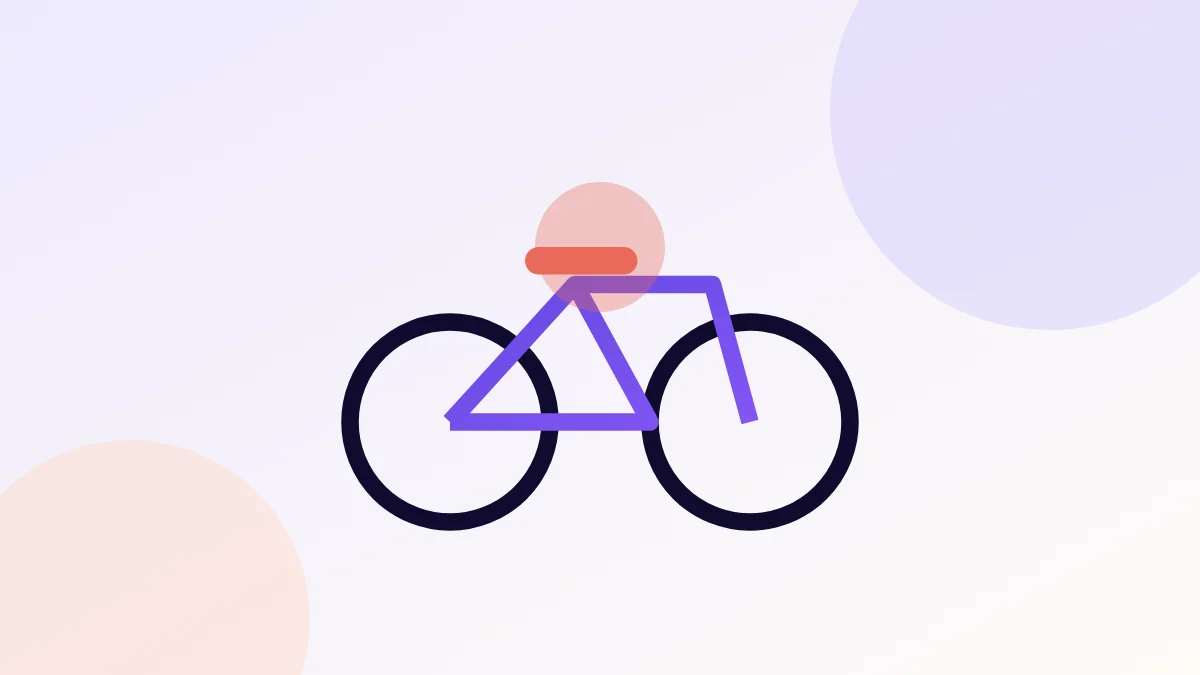
Cycling and erectile dysfunction: what the evidence actually says
The scare headline doesn’t survive the data. What does survive is a specific problem, in specific riders, with a genuinely fixable cause.
Read
Smoking and erections: the dose, the damage and what quitting recovers
The relationship is dose-dependent, which is unusually good news: it means the number you smoke is a dial, not a switch.
Read
Erectile dysfunction myths: what’s actually true
Almost everything men believe about erections is picked up second-hand, usually from someone equally unsure. Here is what survives contact with the evidence.
Read
Talking to your partner about erection problems
The silence usually does more damage than the erection. Here is what to say, and what your partner is probably already thinking.
Read
Sex after a heart attack: when it’s safe to start again
Almost nobody brings it up on the ward, and almost everybody wants to know. The honest answer is less restrictive than most people assume, with one genuinely serious exception.
Read
Morning erections: what they tell you, and what they don’t
The internet has turned a rough biological signal into a home diagnostic test. It is not one, and treating it as one sends men down the wrong path in both directions.
Read
Pelvic floor exercises for men: how to do them properly, and what they can realistically do
Widely recommended, rarely taught properly, and supported by a thinner evidence base than the internet suggests. Still worth doing — if you are doing them right.
Read
Peyronie’s disease: curvature, plaques and what UK treatment actually offers
A condition men tend to Google at three in the morning and then say nothing about for a year. Waiting is the one thing that genuinely makes it harder to treat.
Read
Delayed ejaculation: the least discussed male sexual problem
There is no agreed stopwatch definition, no licensed UK treatment and very little research. There is still a lot that can be done about it.
Read
Low libido in men: the causes that get missed
Low desire is a symptom of depression, a side effect of its treatment, and a sign of testosterone deficiency. Sorting out which is which is the whole job.
Read
Antidepressants and sexual side effects: how common, and what can be done
Ask men directly and the rates are enormous. Wait for them to volunteer it and the rates look tiny. That gap is most of the problem.
Read
Blood pressure medicines and erections: what the evidence really shows
Beta blockers and water tablets have a reputation here that the randomised data do not really support. The reputation itself turns out to be part of the problem.
Read
Erections after prostate surgery: what recovery actually looks like
The single most useful thing to know is that early failure is not the verdict. Recovery runs on a two-to-three-year clock, not a six-week one.
Read
Diabetes and erection problems: why the link is so strong
The commonest cause of erectile difficulty that nobody mentions at the diabetes review. It is worth raising, because it changes what gets checked.
Read
Erectile dysfunction in your 20s and 30s: what’s usually behind it
Common, rarely talked about, and usually fixable. It still deserves a proper look rather than a tablet bought online.
Read
Weight loss supplements: what the evidence actually shows
No supplement sold in the UK has evidence of clinically meaningful weight loss. Several have evidence of liver injury.
Read
Fifteen weight loss myths, and what replaced them
Several of these were true when they were written. A few were never true. Two changed in the last eighteen months.
Read
Weight loss and cholesterol: what actually moves
The part of your cholesterol panel that responds best to weight loss is not the part most people are watching.
Read
Weight loss and blood pressure: about 1 mmHg per kilogram
One of the few places in medicine where a rule of thumb survives contact with the meta-analysis.
Read
Weight and knee pain: four kilos of load per kilo lost
The number everyone quotes is about load per step, not about your body weight. The real version is more impressive.
Read
Weight and fertility: what the evidence supports, and what it doesn’t
Some of what people are told about weight and conception is true. Some of it is needlessly frightening and not supported.
Read
Weight and cancer risk: the second biggest preventable cause
Only about 15% of people in the UK know this link exists, which is a large gap for the second biggest preventable cause of cancer.
Read
Very low calorie diets: what NICE allows and why
The rules around these are unusually specific, and the reasons are not squeamishness.
Read
Type 2 diabetes remission: what the NHS programme actually achieves
The famous 46% figure is real. It is also the twelve-month number, and the five-year number is very different.
Read
Tracking calories accurately, or accurately enough
The errors are not random. They cluster in four predictable places, which makes them fixable.
Read
Thyroid and weight: what an underactive thyroid really explains
It is the most requested blood test in weight conversations, and the most commonly misread result.
Read
How to get a useful appointment about your weight
The difference between a wasted appointment and a useful one is usually three things written down beforehand.
ReadHow we write
- Written by
- The Manova editorial team
- Original writing. No AI-spun rewrites of other people's articles.
- Medically reviewed by
- Naeem Teni, Clinical Lead
- GPhC 2215591, independent prescriber. Every article, before it is published.
- Referenced
- NHS, NICE, MHRA and peer-reviewed research
- Every article lists its sources, with the date each guideline was published.
Articles about prescription medicines are written to inform, not to advertise. They are not a substitute for advice from your own clinician.